If you’ve ever heard of or visited Jackson Hole, you may have wondered how, exactly, that name came to be, and what the difference is between Jackson and Jackson Hole. Although it is somewhat of a peculiar name, Jackson Hole holds deep roots in the region’s geography and history, dating back to the early days of exploration and fur trapping in the American West. In short: “hole” was mountain-man slang for an enclosed mountain valley, and “Jackson” honors the fur trapper who worked it.
What Does ‘Hole’ Mean in Jackson Hole?
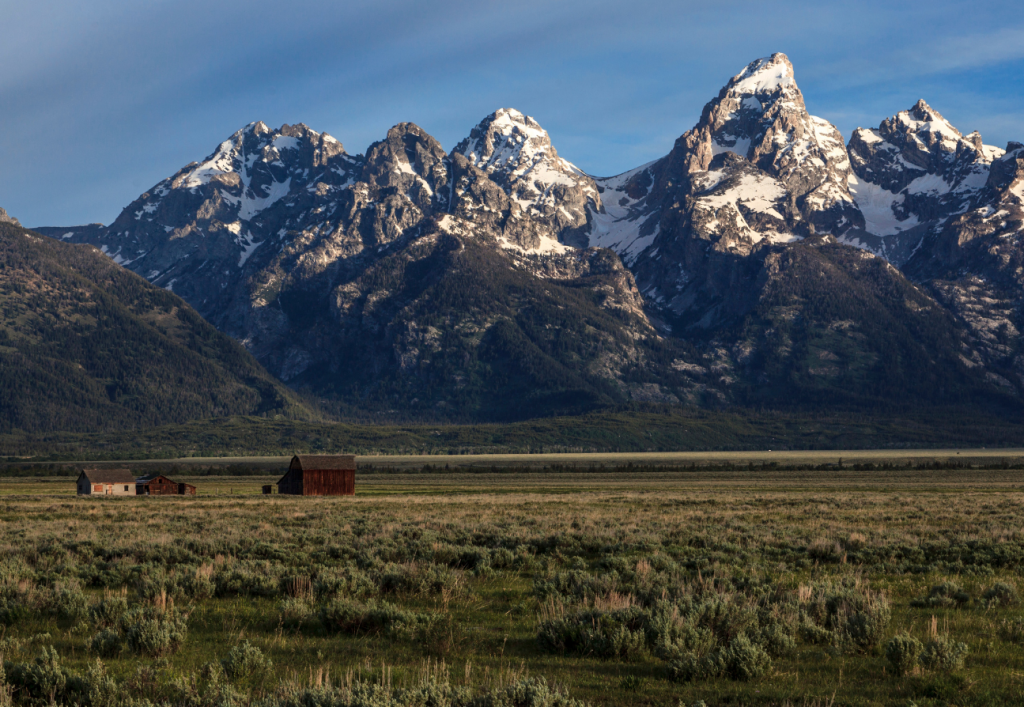
The term “hole” was commonly used by 19th century explorers and trappers to describe a valley that was difficult to access from the surrounding terrain. These “holes” were enclosed by mountain ranges, with limited entry points and long, harsh winters that made travel in and out challenging. Jackson Hole fits that description perfectly. The valley sits at roughly 6,200 feet in elevation and is surrounded by dramatic mountains, including the Teton Range to the west, the Gros Ventre Range to the east, and the Snake River Range to the south. For early explorers, it truly felt like a geographic bowl, or “hole,” in the mountains, a story the National Park Service tells in its own history of Jackson Hole’s mountain-man era.
Other western areas that use the term include Pierre’s Hole in Idaho, Big Hole and Ross’ Hole in Montana.

Who Was Jackson Hole Named After?
The “Jackson” part of the name is commonly attributed to David “Davey” Jackson, a fur trapper, explorer, and partner of frontiersman Jedediah Smith. In the early 1820s, Jackson and other trappers frequented the valley while searching for beaver pelts, which were in high demand at the time. It is believed William Sublette coined the name “Jackson’s Hole,” initially in the possessive, to honor Davey Jackson. Eventually, the possessive was dropped, and “Jackson Hole” became the general term used to describe the region. The town of Jackson was named in 1894 and is located at the southern end of the valley. So, Jackson is the town, whereas Jackson Hole is the valley that includes several towns: Jackson, Wilson, Kelly, and Moose.
Before it was known as Jackson Hole, the valley was home to Indigenous peoples for thousands of years, including the Eastern Shoshone. They used the land seasonally for hunting and travel, long before European-American explorers arrived. The name “Jackson Hole” reflects a later chapter in the valley’s history, one shaped by westward expansion, the fur trade, and the language of early settlers.
Jackson Hole Today
Today, Jackson Hole is known less for its isolation and more for its world-class recreation, iconic wildlife, and stunning landscapes. Yet the name remains a nod to the valley’s rugged past and the early explorers who viewed it not as a destination, but as a remote and formidable place tucked deep within the mountains. While Jackson Hole may sound unusual at first, it’s a name that perfectly captures the valley’s geography, history, and frontier spirit. What once made for difficult travel back then lends itself to incredible scenery on our present-day float tours, see it for yourself on a Snake River scenic float through the heart of the valley these early explorers once called home.